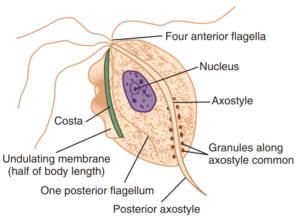
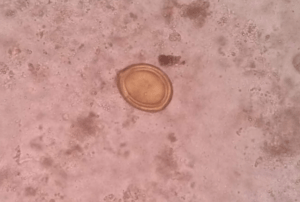
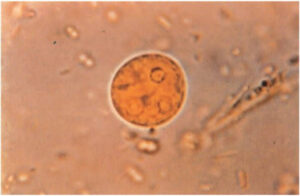
Strongyloides stercoralis: Principles, Procedures, and Clinical Significance
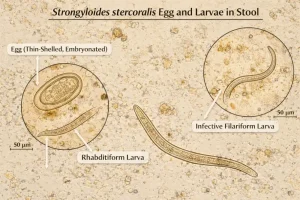
Strongyloides stercoralis, commonly known as the threadworm, is a soil-transmitted intestinal nematode capable of causing chronic and potentially life-threatening infections. While less prevalent than other intestinal nematodes, it remains a significant global health concern, particularly in tropical and subtropical regions of Asia, Latin America, and Africa. Estimates suggest that 30–100 …

Read more

Leishmaniasis: Life cycle, pathogenesis and laboratory diagnosis

Introduction Leishmaniasis, a vector-borne disease caused by protozoan parasites of the genus Leishmania, is transmitted through bites of infected female sandflies. As a neglected tropical disease, it affects millions globally, necessitating accurate laboratory diagnosis for effective management. The World Health Organization (WHO) estimates 12 million people are affected, with approximately …

Read more

Cyclospora cayetanensis: Laboratory Diagnosis

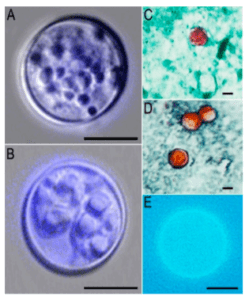
The coccidian parasite Cyclospora cayetanensis was recently identified as a human intestinal pathogen. Schneider identified it in 1881, and Ashford reported it as a human infection in 1979. Cyclosporiasis, which is caused by ingestion of sporulated oocysts in contaminated food or water, has been identified as a primary source of …

Read more

Trichomonas vaginalis

Trichomonas vaginalis is a parasite that can infect the urogenital systems of both men and women. It was initially discovered by Donne in 1836. The pathogenic parasite T. vaginalis causes vaginitis, urethritis, and prostatitis. T. vaginalis infection is frequently mistaken for a sexually transmitted disease. Freshly voided urine, prostatic secretions, …

Read more

Differentiate artifacts in microscopy

A lot of structures appear like parasites but aren’t. In microscopy, artifacts and confusers are two categories of structures that are most often present in stool and blood samples. Stool objects and confusers may be triggered by disease mechanisms, medications, and/or eating patterns. It may be perplexing to see free-living …

Read more

Enterobius vermicularis: Laboratory Diagnosis

Due to its long-pointed tail, which resembles a straight pin in the adult worm, Enterobius vermicularis is called a pinworm. It is also known as ‘Seatworm’. It was originally called Oxyuris vermicularis, discovered by Linnaeus in 1758, and the condition was for several years referred to as oxyuriasis. In ancient …

Read more

Giardia Lamblia

Anton Von Leeuwenhoek (1681) discovered Giardia Lamblia originally named Cercomonas intestinalis, later also known as Giardia intestinalis or Giardia duodenale in his stools, making it one of the earliest known protozoan parasites. It is called Giardia after Paris Professor Giard and Lamblia after Prague Professor Lambl, who provided a detailed description of the parasite. It is …

Read more

Entamoeba histolytica: Symptoms, Diagnosis, and Treatment

Entamoeba histolytica is a parasitic protozoan that causes amebic dysentery and can lead to severe complications like liver abscesses. Common in areas with poor sanitation, it is vital to understand its symptoms, methods of diagnosis, and treatment options for effective management. By infecting the mucosa of the colon, this ameba infect …

Read more